-
Address: cnr Retief & Jordaan Street, Jordania 9499 South Africa
-
Phone: +27 56 212 2302

About Us
Who We Are
The Beginnings
The Sisters of Notre Dame de Namur (SNDs) were invited to come to Johannesburg in South Africa in 1903 by Bishop Matthew Gaughren. This was after Johannesburg was settling down following the Gold Rush of the 1880s and the mushrooming of it into the country’s gold mining centre in the sub-continent (and the future industrial heart of the country). Bp Gaughren hoped that the Sisters would open a school in Belgravia on the edge of the town and at the right time a Teachers’ Training College. In 1905, Bp Gaughren moved to Kimberley and his successor did not follow-up the invitation, although plans had already been drawn up for the convent, school and Training College. Bishop Gaughren, in Kimberley, the diamond capital in the heart of agricultural country, seized the moment and renewed his appeal to the Congregation, asking for Sisters to come as educators to his newly constituted prefecture and to Kroonstad. As a result, the first foundation made by SNDs in South Africa was in Kroonstad in 1907, and not in Johannesburg as had first been proposed.
The Sisters have been involved in formal education in Kroonstad since the first five arrived in 1907. Their first activities were with white children in the town. Then came the ‘prestigious’ boarding school for girls on the edge of the town, and very soon catechetical work with the African children who lived in the ‘township’ (or ‘location’ as it was known) on the other side of the town. The Sisters opened a primary school for these children in 1916, and the school, though on a different site, has been in existence since then and thousands of children have passed through its doors.
In 1972, after making a mission statement committing themselves to work with the oppressed people in the country, SNDS sadly closed their ‘boarding school in Kroonstad – the Convent on the Hill – as it was called, and the Sisters who were freed by this move went to work in Swaziland and Botswana. The township school – St Peter Claver’s – continued, and the Sisters living in a small house in the town, also engaged in catechetical work in the Coloured and White parishes. Those were the days of Apartheid, of strict separation of White, Coloured and African sections of the population.
The Convent on the Hill, sold to the Government in 1973 was used for different purposes until the early ‘90s, ending up as a training centre for S A Defence Force engineers. This terminated in 1991 and the building was put under the surveillance of a local farmer, who allowed anyone to use it, to vandalise it and to strip it of every removable part.
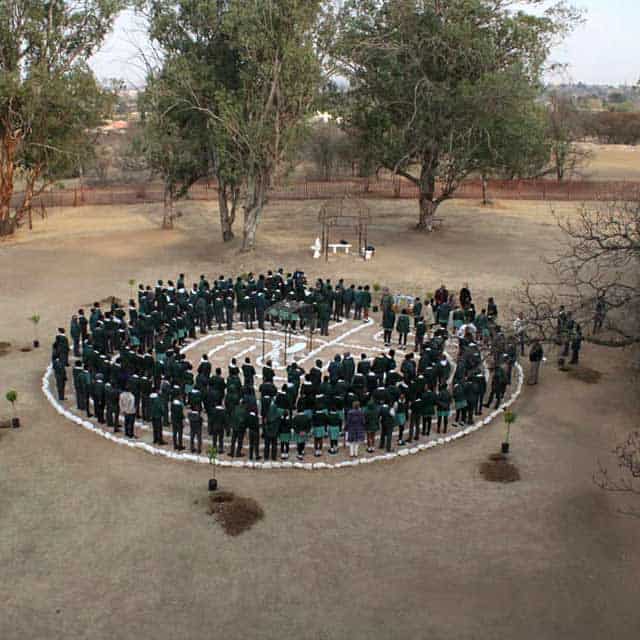
To cut a long story short, it was given back to the SNDs in its vandalised situation in 1999, and they formed a Non-Profit Company with the Diocese and four other Religious Congregations who had worked in the Free State at some stage in the preceding century. The property was returned to this Non-Profit company for education purposes. A considerable sum of money was raised by the collaborative non-profit Company members to restore the building, which since 2011 has housed theNotre Dame St Peter’s school, from Grade R – 12. The Maokeng school has been closed since 2018, as it is more cost efficient to house all the grades on one campus.
In addition to this formal education work, since 1908 an SNDdeN has been responsible for the HJIV/AIDS desk in the Diocese of Kroonstad, now under the umbrella of Caritas Kroonstad. This programme has grown substantially to include training and supporting over 100 Caregivers attached to the different parishes, running Early Learning Centres and programmes for orphans and vulnerable children from them, doing TB testing across the diocese, and a variety of projects to assist the whole outreach be sustainable.
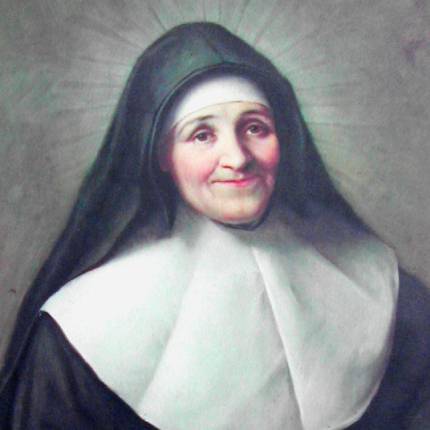
St. Julie Billiart founded the Sisters of Notre Dame de Namur to make known God’s goodness, especially among the most impoverished and abandoned people in the world. Today, Sisters of Notre Dame work with refugees in London, street children in Nairobi, immigrant farm workers in Florida, AIDS orphans in Zimbabwe, the homeless in Haiti… and always, with women and children, who are among the most vulnerable.
We work to enable people living in poverty. We help them to obtain what is rightfully theirs by changing unjust structures. We believe that education in varied forms is the best way to accomplish this goal.
Recognized as outstanding educators, thousands of Sisters of Notre Dame have taught children and adults over the years on five continents. Although many Sisters continue to staff schools, others have chosen to work with the homeless, AIDS patients, the elderly poor — and countless others in need of help. All these ministries have one aim: to proclaim in our time, as St. Julie did in hers, that God is good!
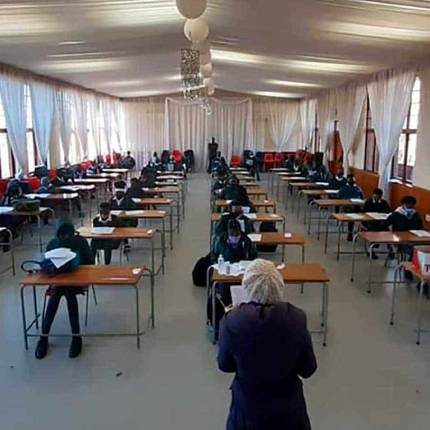
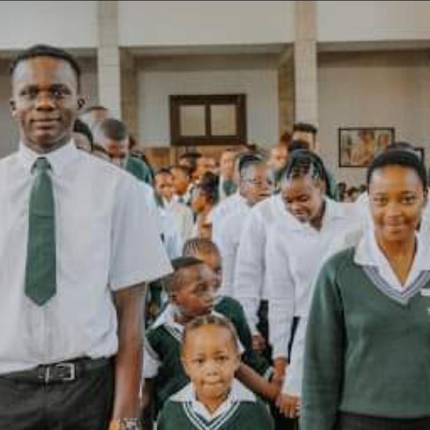
The Sisters have been involved in formal education in Kroonstad since the first five arrived in 1907. Their first activities were with white children in the town. Then came the ‘prestigious’ boarding school for girls on the edge of the town, and very soon catechetical work with the African children who lived in the ‘township’ (or ‘location’ as it was known) on the other side of the town. The Sisters opened a primary school for these children in 1916, and the school, though on a different site, has been in existence since then and thousands of children have passed through its doors.
In 1972, after making a mission statement committing themselves to work with the oppressed people in the country, SNDS sadly closed their ‘boarding school in Kroonstad – the Convent on the Hill – as it was called, and the Sisters who were freed by this move went to work in Swaziland and Botswana. The township school – St Peter Claver’s – continued, and the Sisters living in a small house in the town, also engaged in catechetical work in the Coloured and White parishes. Those were the days of Apartheid, of strict separation of White, Coloured and African sections of the population.